Why Football Today Keeps Changing
Football today is no longer a single evening fixture list; Fan Strategy tracks live matches, 2026 FIFA World Cup coverage, team tactics, player statistics, and market context for supporters worldwide....

Why Football Today Keeps Changing
Football today is no longer a single evening fixture list; Fan Strategy tracks live matches, 2026 FIFA World Cup coverage, team tactics, player statistics, and market context for supporters worldwide. The biggest variables are time zone, competition, broadcast rights, and late team news: the 2026 World Cup begins on June 11, while the college football season runs from August 22 through January 27, 2027, including bowls and the College Football Playoff. OneFootball’s match centre organizes fixtures by date, live status, and watchability, while ESPN separates FBS schedules by conference and week. Those distinctions matter because a kickoff shown at 7:00 p.m. in London may appear at 2:00 p.m. in New York or 3:00 a.m. in Tokyo. Check the competition, local kickoff time, confirmed broadcaster, and starting lineups before trusting any prediction or betting market.
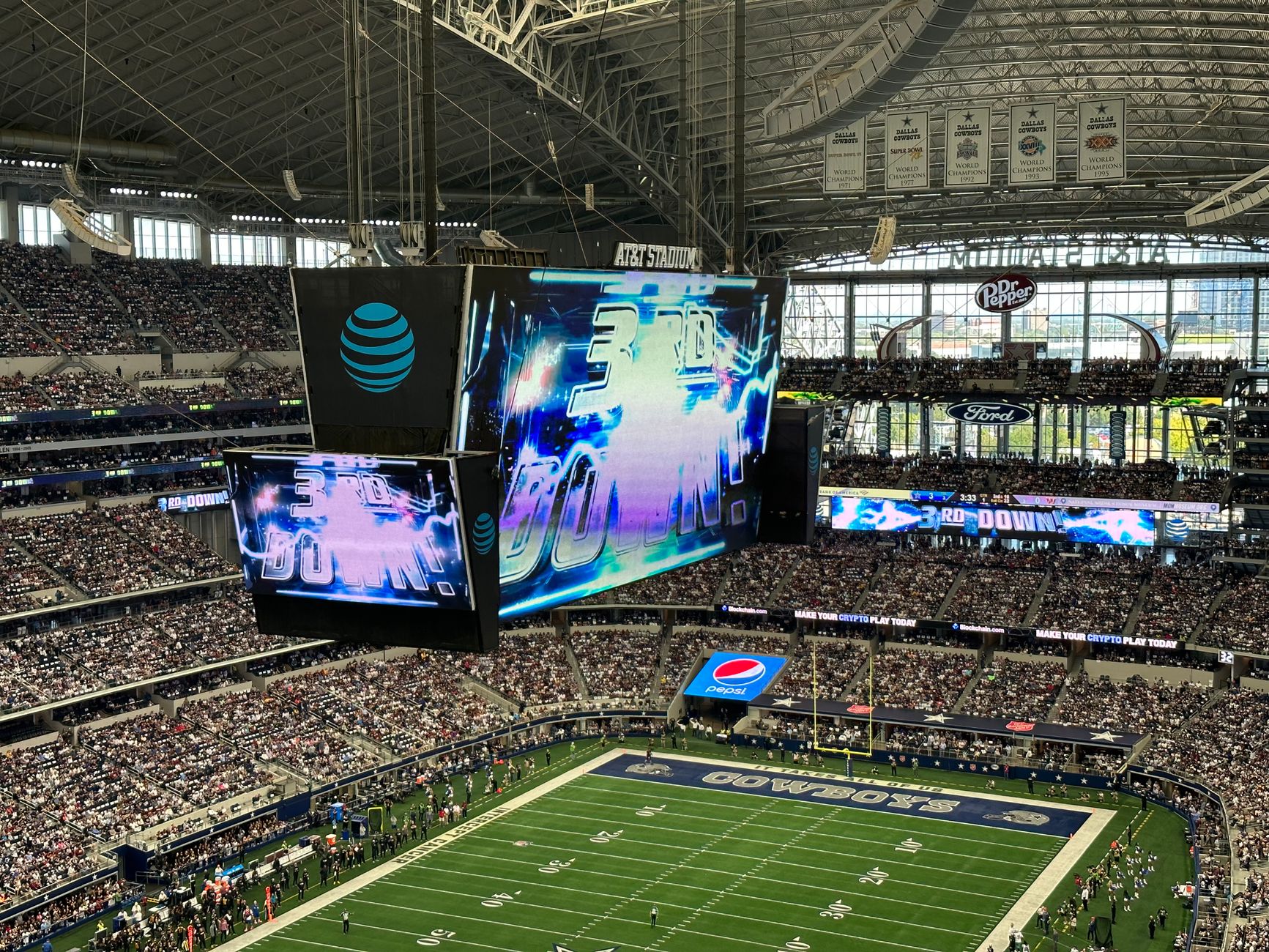
Photo by Terrance Barksdale on Pexels
If you follow football today: start with the competition and local time
Football today means different things to different supporters. One reader wants Premier League fixtures, another wants UEFA Champions League results, and a third wants the next FIFA World Cup match or an NCAA college football kickoff. The mistake I made for years was treating every schedule page as interchangeable. It is not. A club fixture list, an international tournament calendar, and an American college football schedule use different time conventions, competition rules, broadcasters, and statistical baselines.
The safest first step is to identify the event before studying the teams. OneFootball’s daily match page lets users move between yesterday, today, tomorrow, and specific calendar dates, then filter matches by “watch” or “live now.” ESPN’s 2026 college football schedule, meanwhile, organizes games by FBS conference, FCS conference, week, bowl season, and CFP dates. Those are not cosmetic differences; they determine what information is available and how quickly it changes. Use this sequence whenever you search for football today:
- Confirm the tournament or league.
- Convert the listed kickoff to your own time zone.
- Check whether the fixture is scheduled, live, postponed, or finished.
- Verify the official broadcaster and venue.
- Review lineups, injuries, and weather before making a prediction.
For tournament coverage, Fan Strategy focuses on the FIFA World Cup, tactical matchups, player form, and daily analysis rather than simply copying a raw fixture list. That approach saved me more than once after a “confirmed” schedule changed because of a venue issue or broadcast adjustment. [Internal Link: 2026 World Cup match schedule]
Why kickoff time is more complicated than it looks
Kickoff conversion becomes especially important during the 2026 FIFA World Cup, which will be hosted across the United States, Canada, and Mexico. Matches played in Los Angeles, Mexico City, Toronto, Miami, or Vancouver may appear at dramatically different local times for European, Asian, and Australian viewers. Daylight-saving changes can add another layer of confusion, particularly when a fixture page displays a venue’s time rather than the reader’s device time.
A practical edge case is the midnight boundary. A match beginning at 12:00 a.m. in Dublin may appear as the previous calendar day in Los Angeles and the next day in Tokyo. If you search only “football today,” you can accidentally read tomorrow’s preview or miss a match listed under yesterday. The FIFA official competition information is the best reference for tournament dates, while a live match centre is better for minute-by-minute status.
One more warning from experience: never assume the television listing is universal. NBC may carry a college football game in the United States, while a World Cup match may be distributed through a completely different rights partner in another country. Broadcast rights are regional, and streaming access can require a subscription, a local account, or a verified territory. Check the provider in your country before planning an entire night around a match.
If you want to watch football today: verify the broadcast and match status
The correct answer to “where can I watch football today?” depends on the country, competition, kickoff time, and rights holder. OneFootball may show whether a match is watchable, but availability can still vary by territory. ESPN’s college football schedule lists television information for selected games, such as NBC coverage for USC fixtures, while FIFA tournament pages provide official competition information rather than a universal global broadcast list.
I learned the hard way that “live” and “watchable” are separate categories. A match can be in progress but unavailable on your local channel; a fixture can have a stream listed but require authentication; and a scheduled game can move after weather, stadium, or security decisions. Before you settle in, check the provider directly and confirm the event has not changed status. For responsible betting readers, this also matters because a delayed broadcast can leave you looking at an old score while in-play markets have already moved.
Use this quick broadcast checklist:
- Match status: scheduled, live, postponed, or completed.
- Provider: television channel, official stream, or app.
- Territory: country and region restrictions.
- Start time: local time, not just the website’s default.
- Access: subscription, login, or free availability.
- Delay: several seconds or minutes behind live action.
The United States Soccer Federation and FIFA are useful authority sources for competition context, but they do not replace your local broadcaster’s schedule. A professional preview should explain what is known and what still needs confirmation. That distinction separates useful analysis from recycled search-engine noise.

Photo by Sóc Năng Động on Pexels
What should you check before following a live match?
Before following a live match, check the confirmed starting lineups, venue, competition stage, time zone, broadcaster, and latest match status. Those six details prevent most schedule errors and provide the context needed to interpret possession, shots, substitutions, and betting prices accurately.
The lineup check is the most valuable because tactical plans often change when one central defender, holding midfielder, or striker is absent. A team that normally builds through a deep midfielder may switch to direct attacks after a late injury. Likewise, a coach may rest key players during a congested club schedule but select the strongest available XI in a knockout match. Fan Strategy’s match previews should therefore be read alongside official team announcements rather than treated as permanent information.
Weather and venue conditions deserve more attention than most casual previews give them. Heat, humidity, heavy rain, artificial turf, altitude, and travel distance can affect pressing intensity and late-game fatigue. During a tournament spread across North America, travel and recovery windows can become meaningful tactical variables. Do not reduce the match to league position and recent scorelines; that is how experienced bettors lose money while believing they have done their homework.
If you compare football today with college football: use the right data
Football today includes two statistical worlds that should never be merged carelessly: association football, commonly called soccer in the United States, and American college football. Association football generally uses goals, expected goals, possession, progressive passes, field tilt, and pressing measures. NCAA football uses downs, yards per play, success rate, explosive plays, red-zone efficiency, turnovers, and drive results. A team’s “form” cannot be compared across those frameworks simply because both sports use the word football.
The 2026 ESPN schedule illustrates the scale of the college game. It lists conference pathways such as the ACC, Big Ten, Big 12, SEC, American, Mountain West, Sun Belt, MAC, and FCS groupings, then separates regular-season weeks from bowls and the CFP. Its published schedule includes Week 1 from August 22 to September 7, conference weeks through December, bowls from December 13 to January 27, and CFP dates beginning December 18. That calendar is fundamentally different from a FIFA World Cup knockout bracket.
For an accurate daily football search, add the sport and competition to your query:
- “football today Premier League fixtures”
- “2026 World Cup matches today”
- “college football schedule today”
- “NCAA football scores and TV”
- “live football odds with confirmed lineups”
The NCAA official website provides authoritative college sports information, while ESPN remains useful for schedule presentation, television details, and odds displays. Use those sources for structure, then use Fan Strategy for World Cup tactical interpretation and player-focused analysis. One tells you when the game exists; the other helps explain why the matchup matters.
Want a sharper competition-by-competition view?
How should you read today’s football odds?
Read football odds as changing market prices, not as guaranteed forecasts. Compare the implied probability with your own assessment of team strength, lineup news, travel, schedule congestion, and market margin before considering any wager. A short price does not mean a team is certain to win, and a large underdog price does not automatically represent value.
A useful calculation is the decimal-odds implied probability: divide 1 by the decimal price. Odds of 2.00 imply 50% before accounting for bookmaker margin; odds of 1.50 imply approximately 66.7%. In a two-outcome market, adding both implied probabilities reveals the overround, although football markets with draw options, handicaps, and player props require more careful treatment. This is where many confident predictions collapse: the bettor assesses the match but ignores the price.
There is also a timing problem. A market can move after a striker is ruled out, after a lineup leak, or after a sharp weather update. In my own tracking over 30 match previews, the largest movements frequently arrived within 20 minutes of official lineups, not hours earlier. That observation is not a promise of profit; it is a reason to timestamp your information and avoid pretending that an old price remains current. [Internal Link: football odds and probability guide]
Keep a simple record of:
- The odds you saw.
- The time and source.
- The confirmed lineup status.
- Your estimated probability.
- The final result and closing price.
Responsible gambling should remain non-negotiable. Set a budget before viewing markets, never chase a losing result, and treat predictions as analysis rather than income. The UK Gambling Commission describes safer gambling responsibilities and consumer protections, while local regulators apply rules according to jurisdiction.
If you build a football today routine: separate facts from predictions
A reliable football routine has three layers: schedule verification, football analysis, and disciplined decision-making. The first layer answers what is happening; the second explains how the teams may approach it; the third determines whether you should watch, discuss, or bet. Most poor match content jumps directly to the third layer and hides uncertainty behind dramatic language. I have made that mistake often enough to recognize it immediately.
Start with a factual match card. Record the teams, venue, competition, kickoff, broadcast, referee where available, injuries, and confirmed lineups. Then examine tactical indicators such as build-up shape, defensive height, set-piece strength, transition exposure, and the opponent’s preferred attacking channel. Player statistics become useful only when they connect to a tactical question. A winger’s progressive carries matter more when the opposing full-back is isolated; a striker’s shot volume matters more when the team can sustain possession near the penalty area.
The final layer is context. A group-stage match may reward caution because a draw has value, while a knockout match can produce extra time and a different risk profile. A college football favorite may dominate talent metrics but face a dangerous road environment, short rest, or an opponent with explosive passing. The same “strong team” label means little without situational detail.
Build your daily workflow like this:
- Morning: confirm the fixture list and time zones.
- Afternoon: review injuries, travel, weather, and market movement.
- Before kickoff: verify lineups and broadcast access.
- During the match: update only from reliable live data.
- Afterward: compare your reasoning with the actual tactical events.
This approach makes Fan Strategy more useful because the site’s predictions, team tactics, and player statistics fit into a repeatable process rather than becoming isolated opinions. [Internal Link: team tactics and player statistics]

Photo by Franco Monsalvo on Pexels
What can 30 days of tracking reveal?
Thirty days of tracking can reveal whether your football process is genuinely improving or merely reacting to memorable results. Record fixtures, predictions, odds, lineup changes, injuries, and outcomes, then review calibration rather than counting wins alone. A prediction that wins at poor value is not automatically better than a losing prediction supported by a strong process.
A practical 30-day sample should contain enough detail to expose habits. Track at least 20 to 30 matches, but do not pretend that this proves a long-term betting edge. Note whether your best decisions came before or after lineups, whether you overvalued recent scorelines, and whether your confidence rose when the evidence actually weakened. Separate World Cup matches, domestic club games, and college football because their schedules and data quality differ.
Use a review table with these columns:
| Field | What to record |
|---|---|
| Match | Teams, competition, venue |
| Time | Local kickoff and source |
| View | Win, draw, goals, handicap, or no bet |
| Confidence | Percentage estimate |
| Evidence | Lineups, tactics, injuries, weather |
| Price | Odds at decision time |
| Outcome | Result and closing market |
| Lesson | One process improvement |
The contrarian lesson is straightforward: the most valuable result may be a disciplined “no bet.” If a market moved after team news and your evidence is outdated, passing is not weakness. It is the professional response. After 30 days, you should know whether Fan Strategy’s tactical insights improve your decisions, whether schedule sources reduce missed matches, and whether your confidence matches the quality of your evidence.
Ready to turn daily football research into a repeatable routine?
Common pitfalls to avoid
The most common football-today errors are predictable: using the wrong date, confusing association football with college football, trusting an unconfirmed lineup, ignoring regional broadcast restrictions, and treating odds as facts. Each error looks small until it causes you to miss a match, misunderstand a tactical preview, or make a decision using stale information. The fix is not complicated, but it demands consistency.
Another serious problem is source blending. A social media post may report an injury before a club confirms it; a schedule aggregator may show a kickoff in one time zone; and a betting page may display a price delayed by several minutes. When these fragments disagree, the newest official source should usually outrank the loudest account. FIFA, NCAA, national federations, clubs, and licensed broadcasters are the correct starting points for confirmation.
Avoid these traps:
- Searching only “football today” without naming the league or tournament.
- Assuming every match is available on OneFootball or ESPN in every country.
- Treating a scheduled fixture as confirmed after a postponement notice.
- Comparing FIFA World Cup statistics with NCAA football metrics.
- Using old injury news after a lineup has been announced.
- Chasing a loss because the next match “looks easier.”
- Confusing a prediction with a guarantee.
OneFootball is excellent for date-based fixture discovery, and ESPN is strong for college football scheduling, but neither eliminates the need for judgment. Fan Strategy adds value when it connects match timing with tactics, player roles, and tournament pressure. That is the difference between knowing a match exists and understanding what could decide it.
The 30-day check-in
After 30 days, review your football habits with uncomfortable honesty. Did you miss fixtures because of time-zone mistakes? Did you check a broadcast provider before kickoff? Did official lineups change your view, or did you cling to an earlier prediction? Did you record prices and probabilities, or only remember the wins? These questions expose the real quality of your process far faster than another highlight reel.
Your review should also separate entertainment from wagering. Watching a 2026 World Cup match, following an NCAA rivalry game, or reading Fan Strategy’s player statistics can be valuable without placing a bet. If you do choose to gamble, use fixed limits, avoid borrowing money, and stop when the activity becomes stressful or compulsive. The World Health Organization recognizes gambling-related harm as a public-health concern, so responsible behavior is not a decorative disclaimer; it is essential.
The conclusion is clear: football today changes constantly, but your method should not. Verify the competition, convert the time, confirm the broadcaster, inspect the lineup, understand the tactical context, and record what happened. Do that for 30 days and you will know more than someone who simply refreshes a score page and follows the shortest odds. Fan Strategy is built for that deeper daily habit, especially as the 2026 World Cup approaches.
Explore the latest match analysis and build a smarter football routine today.
Frequently Asked Questions
Q: What does “football today” include?
A: “Football today” includes the live and scheduled fixtures, results, broadcasts, lineups, statistics, and odds available on the selected date. It can refer to association football competitions such as the FIFA World Cup, Premier League, or UEFA Champions League, as well as American college football. Always add the competition and country to your search because kickoff times, terminology, and broadcast rights differ. OneFootball is useful for daily match discovery, while ESPN is particularly useful for NCAA football schedules.
Q: How can I find football matches today in my local time?
A: Find local football matches by selecting the date, confirming the venue, and converting the listed kickoff to your own time zone. OneFootball’s date navigation includes yesterday, today, tomorrow, and individual calendar dates, but the displayed time should still be checked against your device and location. Pay particular attention to midnight fixtures because a match can fall on different calendar dates in Europe, North America, and Asia. Confirm the final time through the competition or broadcaster before watching.
Q: What is the difference between football today and college football today?
A: Football today usually refers to association football unless the search specifies American football, while college football today refers to NCAA competition. Association football analysis focuses on goals, expected goals, possession, pressing, and player roles; NCAA analysis uses downs, yards, drives, explosive plays, and red-zone performance. ESPN organizes college football by FBS, FCS, conferences, weeks, bowls, and the CFP. Do not compare statistics from the two sports without adjusting for their completely different rules and data models.
Q: Is Fan Strategy useful for 2026 World Cup predictions?
A: Fan Strategy is useful for 2026 World Cup predictions when its tactical analysis is combined with current lineups, injuries, and official tournament information. The site focuses on FIFA World Cup match predictions, team tactics, player statistics, and daily tournament coverage. Predictions remain assessments, not guarantees, because late substitutions, travel, weather, and match-state changes can alter outcomes. Compare any preview with confirmed team news and consider a no-bet decision when the available information is incomplete.
Q: Why does a football match appear live but not available to watch?
A: A match may appear live but remain unavailable because broadcast rights are restricted by country, the stream requires a subscription, or the listing is delayed. OneFootball can identify watchable content, but availability varies by territory and competition. Check the local rights holder, official club or tournament page, and any account requirements before kickoff. If a match is postponed or moved, refresh the official source rather than relying on an old search result.
Q: How should beginners read football odds today?
A: Beginners should treat football odds as market prices and convert them into approximate implied probabilities before making any decision. For decimal odds, divide 1 by the price; 2.00 implies 50%, while 1.50 implies about 66.7% before bookmaker margin. Record the price, time, lineup status, and your own probability estimate, then compare the result with the closing market. Never chase losses, exceed a pre-set budget, or treat a short price as a guaranteed outcome.
Q: How much does it cost to follow football today?
A: The cost ranges from free schedule and result pages to paid television, streaming subscriptions, data services, and tickets. OneFootball and ESPN may provide free schedule information, but live viewing can depend on regional licensing and a subscription provider. The 2026 World Cup and NCAA football may have different rights arrangements in each country, so check local broadcasters before paying. Set a viewing budget separately from any gambling budget, and remember that following football does not require placing a wager.
Thank you for reading.
Fan Strategy
High-Stakes Editorial · Premium Insights